

Hybrid Logistics for Peak Season: How Growing Breweries Stay Fast, Flexible, and Profitable
Brewery logistics costs are rising. Here’s how a hybrid 3PL model helps you scale for summer without locking in overhead you can’t afford year-round.
Published by Tap’in 3PL | tapin3pl.com
Summer is almost here. For most breweries, that means one thing: the phones start ringing more often, the orders start stacking up, and the pressure on your logistics starts climbing. Festivals, pub gardens, weddings, rooftop bars, the on-trade never sleeps in peak season, and your beer needs to be ready to move.
The question growing breweries are wrestling with right now isn’t whether demand will spike. It’s how they’re going to handle it without taking on a load of fixed costs they’ll be stuck with when things quiet down again in October.
That’s where the concept of hybrid logistics comes in, and for many independent breweries, it’s becoming one of the smartest operational decisions they can make.

Why Rising Costs Are Forcing Breweries to Rethink Their Logistics Model
The craft beer industry in the UK and the US has been navigating a prolonged period of cost pressure. Inflation, tariffs, rising energy bills, and tighter distributor margins have hit small and independent producers hardest. The Brewers Association’s 2025 midyear report confirmed that craft volume was down around 5% year-on-year, with closures outpacing openings for the second consecutive year. The phrase their staff economist used was telling: “The days of relative calm are behind us.”
In that environment, committing to more fixed overhead, more vans, more warehouse staff, more keg-washing equipment, is a significant gamble. You’re betting on sustained volume at a time when the market is anything but predictable.
But here’s the contradiction: doing nothing isn’t an option either. If you can’t keep up with summer demand, you lose the venues, lose the shelf space, and lose the relationships it took years to build.
“You can’t grow into capacity you don’t have, but you also can’t afford capacity you don’t always need.”
What Is a Hybrid Brewery Logistics Model, and Why Does It Work?
A hybrid logistics model means keeping some operations in-house while strategically outsourcing the parts that are either too expensive, too variable, or too specialist to manage cost-effectively yourself.
For breweries, this typically looks something like this: you maintain your core production, your taproom, maybe your local drop rounds that you know inside out. But for distribution into London and the wider South East, where cellar drops are specialised, parking is a nightmare, and your vehicles would be running half-full on the way back, you bring in a drinks 3PL partner who already has the routes, the relationships, and the infrastructure.
The key insight is that you’re turning fixed costs into variable ones. Rather than paying for a fleet whether it’s moving or not, you pay for what you actually use. That’s a fundamentally different financial model, and in a market with real seasonal swings, it’s a much safer one.
Stone Brewing, one of the US’s most recognised craft breweries, offers a useful illustration of this thinking. After burning through multiple logistics approaches, they partnered with a specialist 3PL to handle 100% of their outbound freight, nearly 3,000 truckloads a year. Their vice president of logistics described the 3PL as “an extension of Stone” rather than just a contractor, and credited the partnership with helping them reduce miles driven, fill trucks more efficiently, and make better production decisions based on real freight data.
Most independent UK breweries aren’t at Stone’s scale. But the logic applies at every level: specialised logistics expertise, built into your cost structure as a variable, is worth more than a van sitting in your car park on a wet Tuesday in November.
5 Peak Season Logistics Gaps That Cost Breweries Time and Money
The logistics gaps that cause the most pain for breweries tend to emerge in a pretty predictable sequence as volume increases:
-
Orders spike but your delivery slots are already full
-
You’re running vans into London with half a load because one order needs to go today
-
Empty kegs are piling up at venues because no one’s collecting them on the way back
-
The keg washer can’t keep up, so clean kegs aren’t available when you need them
-
You’re talking to customers about delays instead of talking to them about your next seasonal release
Any one of these is manageable. All of them at once, during your busiest trading period, while trying to keep the brew schedule on track? That’s how relationships break down and reputations take a hit.
A well-structured hybrid model addresses these pressure points in advance rather than scrambling to fix them in the moment. The businesses that come through peak season in good shape are usually the ones that planned their logistics flexibility before they needed it, not during the crisis.
The Hidden Cost of Slow Keg Turnaround, and How to Fix It
There’s a specific operational headache that sits at the heart of peak season logistics for any brewery doing meaningful keg volume: the keg turnaround cycle.
Every keg you’ve filled and sent out is a capital asset, typically worth £50–£100 or more, that’s temporarily living in someone else’s cellar. The faster it comes back, gets washed, and goes out again, the more efficiently your fleet is working. The slower that cycle runs, the more kegs you need to own to meet the same demand.
During peak season, keg turnaround slows for obvious reasons: venues are busy, collections get deprioritised, and your drivers are focused on deliveries not returns. The result is that breweries often find themselves buying or leasing additional kegs to cover a backlog that’s actually a logistics problem, not a capacity problem.
“A stainless-steel keg is a revenue-generating asset. When it’s in trade, it’s earning. When it’s missing or waiting to be cleaned, it isn’t.”
This is before you factor in the cost of washing. Running your own keg washer sounds straightforward until you account for the machine itself (a commercial unit from a reputable manufacturer like Lambrechts typically represents a significant capital outlay), the floor space it takes up, the water, chemicals, energy, maintenance, and then the inconvenient fact that the machine will be idle for months of the year.
Outsourced keg washing, when it’s integrated into your delivery and collection operation, converts all of that fixed cost into a volume-linked variable. You pay for what you process. When volume is high in the summer, the service scales with you. When it drops in January, so does the cost.
Brewery 3PL in London and the South East: How Tap’in Handles the Hard Part
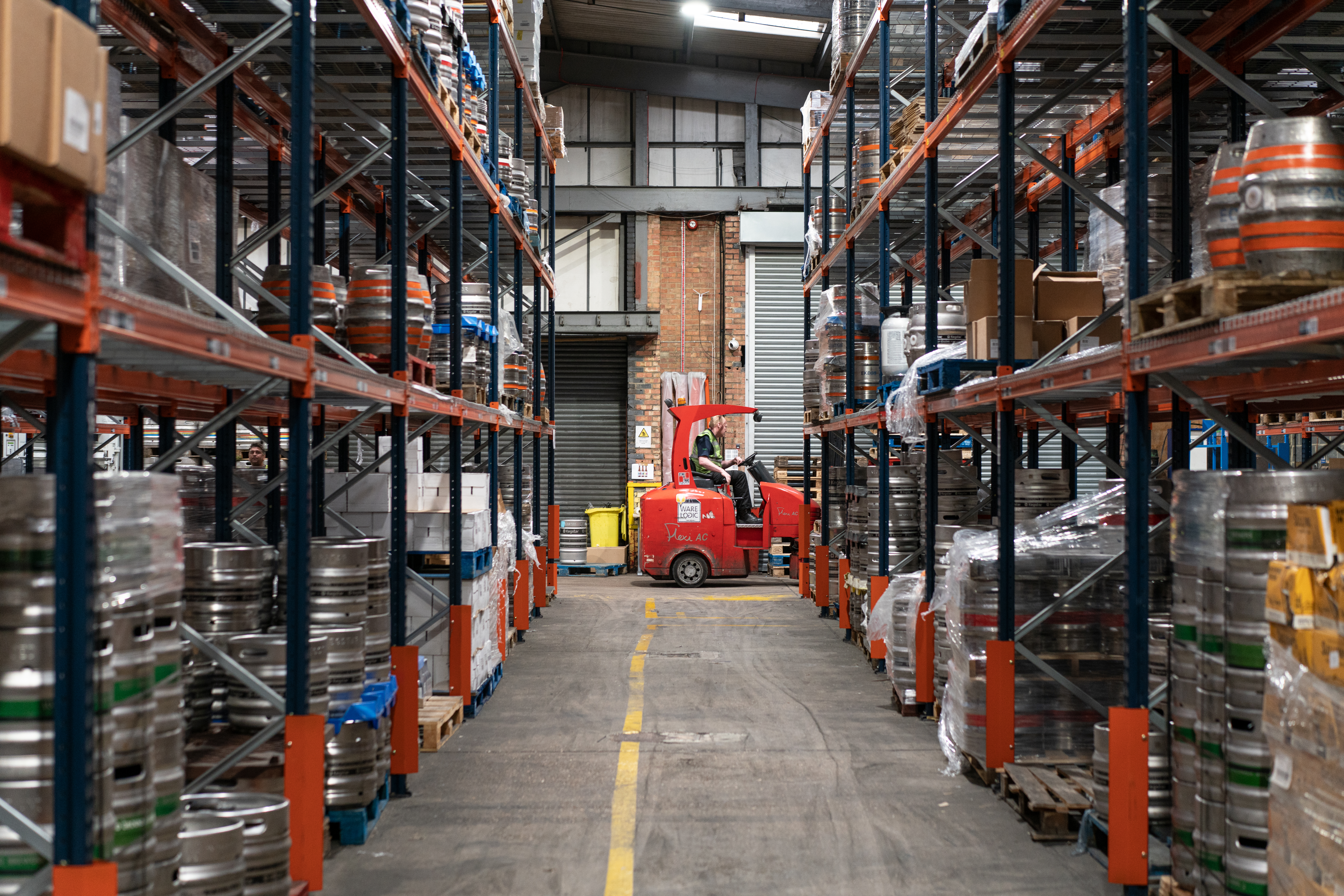
This is where Tap’in 3PL comes in. Based just 13 miles from central London in Erith, Tap’in was built specifically for drinks producers, breweries, distilleries, wineries, and low-and-no brands, who need specialist on-trade logistics into London and the South East without the overhead of running it themselves.
What makes the model distinctive is that it’s genuinely integrated. Tap’in’s drivers deliver fresh drinks into venues and collect empty kegs on the same run. That sounds simple, but it removes one of the most common sources of waste in brewery logistics: the separate empty-collection trip that costs money and generates emissions without generating revenue.
The service covers London four days a week, with delivery into the South East twice a week and national pallet network options for broader reach. Warehousing is handled using Clarus WMS, which gives breweries real-time visibility of their stock, something that’s easy to underestimate until you’re trying to manage a peak season with no clear picture of what’s moving.
For breweries that want the full picture, Tap’in also offers e-commerce fulfilment for direct-to-consumer orders, useful for producers who’ve built a following online and want to service both trade and retail customers from the same stock pool.
Outsourced Keg Washing in the South East: Introducing the Tap’in Wash Hub
One of the more practical additions to Tap’in’s service is the Wash Hub, a dedicated keg washing facility in the South East, the first of its kind in the region. It uses an industry-standard Lambrechts machine to deliver a consistent, validated cleaning process, with every keg inspected before it’s returned.
The commercial case is straightforward. When keg washing is integrated into Tap’in’s collection-and-delivery operation, the cost per keg can come in at around £1.75, significantly less than the long-run cost of doing it in-house once you account for machinery, space, chemicals, water, and the time your team spends on it rather than on brewing.
For regional breweries supplying London, the geography matters too. Rather than dispatching long-distance vehicles into the capital, often with a full load going in and a partly empty or empty van coming back, producers can route through Tap’in’s network. Deliveries go in. Empties come back. They go straight to the Wash Hub. Clean kegs go back into rotation. The whole cycle is tighter, and the cost per delivered litre comes down.
There’s also a resilience argument. If your in-house washer goes down at the worst possible moment, say, the Friday before a bank holiday weekend, having an external wash partner you already have a relationship with is the difference between a disruption and a disaster. Tap’in offers Wash Hub access as overflow capacity, not just as a full replacement, which means breweries can use it as insurance even if they’re not ready to fully outsource the function.

What Hybrid Brewery Logistics Looks Like in Practice
It varies by brewery. But a common pattern looks something like this:
-
Core local deliveries stay in-house, the runs you know, the customers you’ve had for years, the drops that fit neatly into your own schedule
-
London and complex South East routes move to Tap’in, specialist cellar drops, tight delivery windows, postcodes where a standard van doesn’t cut it
-
Keg washing runs through the Wash Hub, either fully outsourced, or as overflow when your own machine can’t keep pace
-
eCommerce fulfilment is handled from Tap’in’s warehouse , freeing up your team to focus on production and trade relationships
The result is a brewery that can scale into peak season without committing to fixed assets, and scale back down without being stuck with costs it can’t justify for six months of the year.
It also means your team isn’t spending their energy on logistics firefighting. That matters more than it sounds. Every hour your head brewer spends worrying about a missed delivery is an hour they’re not spending on the next seasonal release.
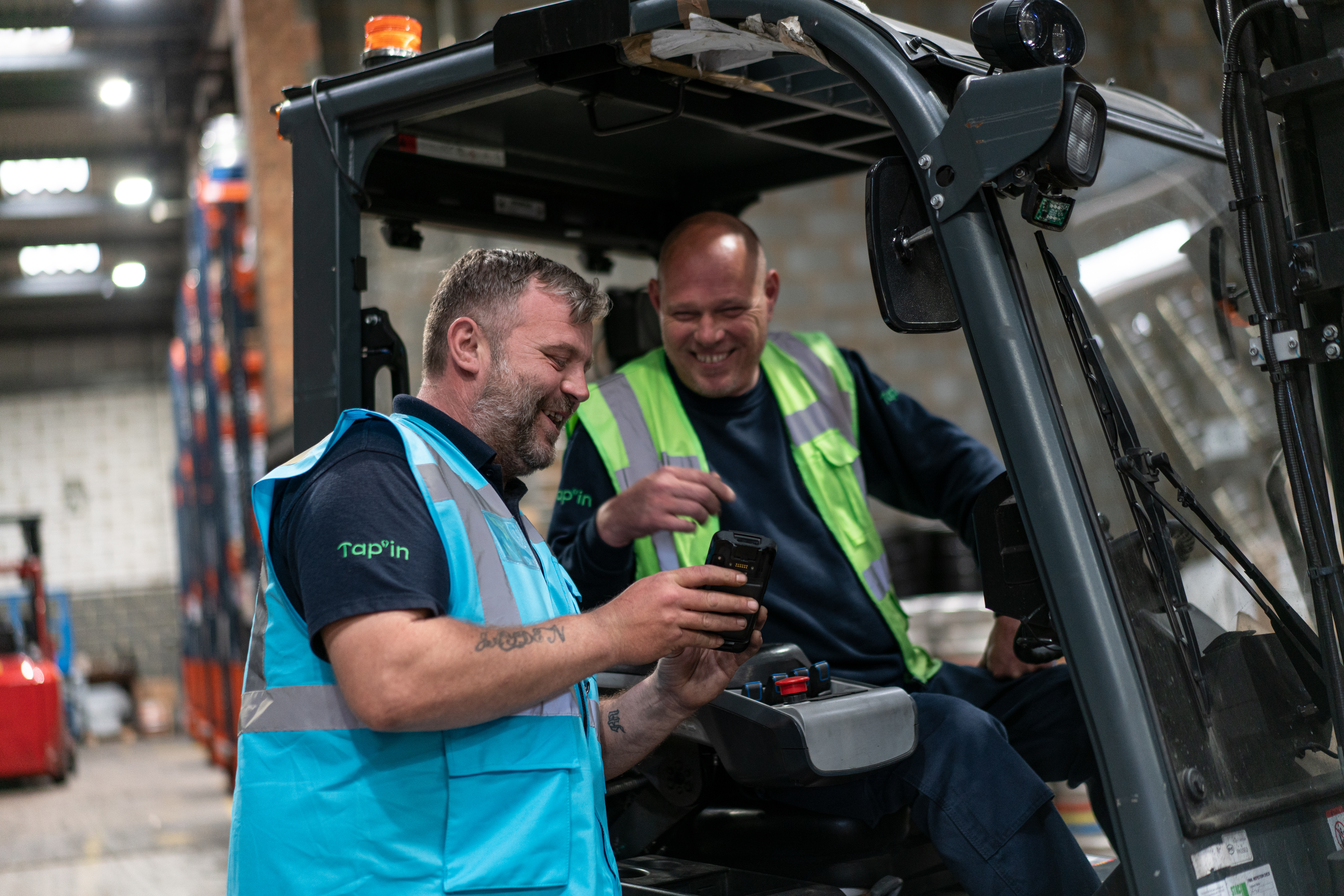
Is Outsourcing Brewery Logistics Actually Cheaper? Let’s Look at the Numbers
The honest conversation about 3PL partnerships always comes back to cost. And it should, especially right now, when margins are already under pressure.
The thing to compare isn’t the 3PL invoice against zero. It’s the 3PL invoice against the real, fully-loaded cost of doing it yourself: driver wages, vehicle lease, fuel, insurance, maintenance, keg washing equipment, floor space, management time. Most breweries, when they do that calculation properly, find the gap is much smaller than they expected, and in many cases, the 3PL model is cheaper, particularly when volume is variable.
Tap’in’s pricing model is built around a Price per Delivered Litre (PDL) framework, which means costs are tied directly to output. When you’re moving more beer, you pay more. When things are quieter, you pay less. For a business managing cash flow through seasonal swings, that kind of predictability has real value.
And that’s before you count the cost of the mistakes that happen when logistics is overstretched, the missed deliveries, the warm beer, the kegs that drift into the trade network and take weeks to get back.
Flexibility Is the Competitive Advantage: What the Best Breweries Are Getting Right
The Brewers Association put it well in their 2025 year-end summary. The breweries navigating this period successfully aren’t the ones with the most assets. They’re the ones with the most flexibility, who can adjust their operations, their product mix, and their logistics in response to what the market is actually doing.
Fiddlehead Brewing in Vermont grew 22% during one of craft beer’s toughest years by staying ruthlessly focused and operationally lean. New Belgium’s Voodoo Ranger family became craft beer’s biggest growth driver through the same period. Neither success story was built on owning more stuff. They were built on doing a few things exceptionally well.
Logistics is one of those things. Not because it’s glamorous, it isn’t, but because when it goes wrong, everything else goes wrong with it. Getting it right, especially during peak season, is one of the most tangible ways a growing brewery can protect its relationships, its margins, and its reputation.
A hybrid model, with a specialist drinks 3PL as your flexible capacity partner, is a practical way to get there without betting the whole operation on a level of volume that may or may not materialise.
Want to know if hybrid logistics could work for your brewery?
Tap’in 3PL works with breweries, distilleries, wineries and low-and-no producers across the South East and London. Whether you’re looking at full outsourcing, overflow capacity for peak season, or just want to understand what integrated keg washing could cost for your volumes, the team is happy to talk it through. Visit tapin3pl.com or get in touch directly.
If you want, I can also provide a version that preserves the font sizes by moving key span styles up onto their parent tags (h1, p, etc.).